
We'll conduct an overview of the AR and VR immersive technology from the base to ensure you have everything you need to create a cutting-edge application in the future. Over the four days, you will learn the skills required to develop your AR and VR applications, which are essential technologies for the evolution to Industry 4.0.
 4 Days Hands On Training
 Project Work & Exercises
 Schedule (9:30 AM - 5:00 PM)
Talk to Us
Augmented reality is an interactive experience of a real-world environment where the objects that reside in the real world are enhanced by computer-generated perceptual information, sometimes across multiple sensory modalities, including visual, auditory, haptic, somatosensory and olfactory.
Virtual reality is a simulated experience that can be similar to or completely different from the real world. Applications of virtual reality include entertainment, education and business.
Over the coming decades, AR and VR will ensure doctors and patients alike are better prepared for what is coming next. Education: AR and VR allow students to thoroughly interact with and be engaged by their assignments in a way they never have before.
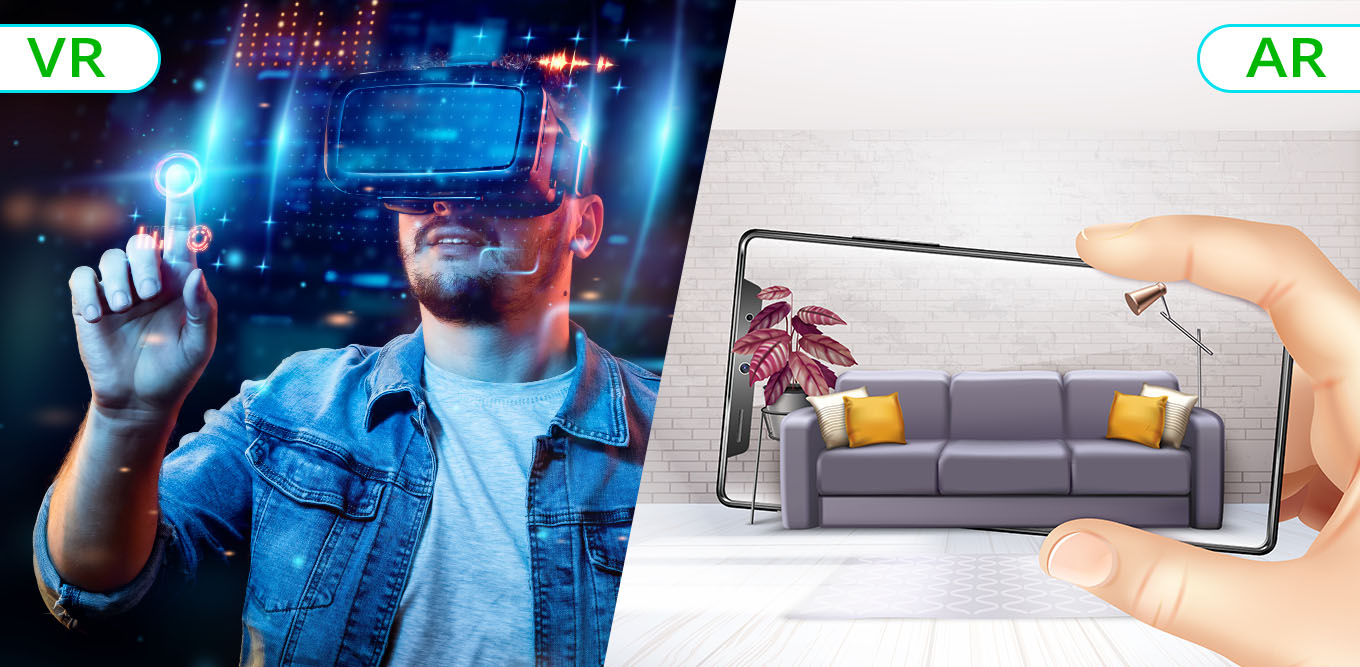
VR creates an immersive virtual environment, while AR augments a real-world scene. VR is 75 percent virtual, while AR is only 25 percent virtual. VR requires a headset device, while AR does not. VR users move in a completely fictional world, while AR users are in contact with the real world.
You can also work as a visual artist or graphic designer who specializes in building virtual environments. However, if you're into computer programming, AR/VR development is one of the most exciting application areas for your skills. Many technical skills are required for becoming an AR/VR developer.
You must be able to work with video game engines like Unity or Unreal to become an AR/VR developer. Both of these systems allow you to construct 3D settings. Furthermore, AR/VR engineers must be familiar with programming languages such as C++, C#, JavaScript , and Swift .
Talk to us
